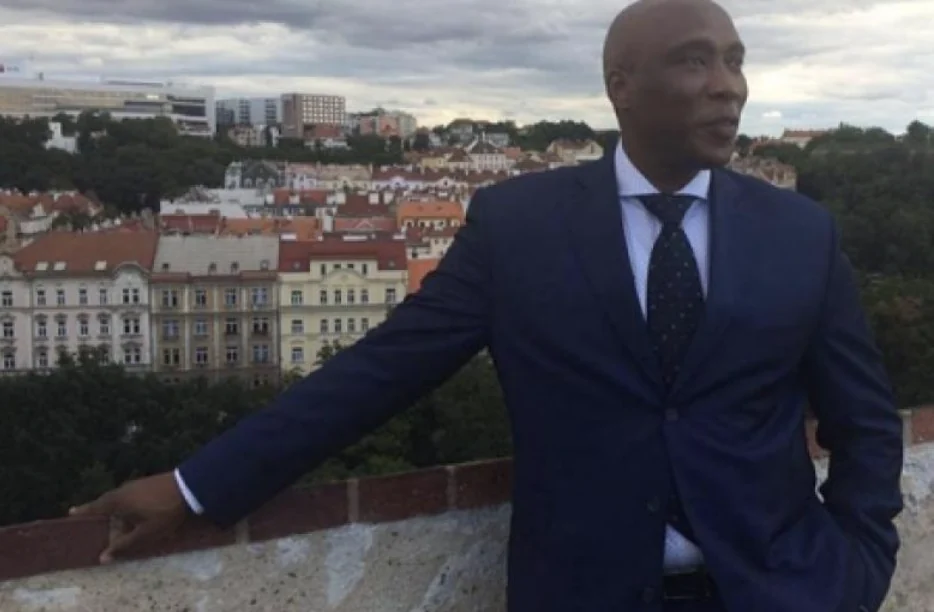
Many John Molson students and applicants aspire to a career in management; what were the main obstacles you had to overcome to succeed as a leader?
Over the course of my career, the notion of leadership has evolved, as has what it means to be a successful leader. I had the opportunity to work with leaders at all levels of organisations - large and small - starting with a small start-up whose founders were three friends and a classmate. Although it was short-lived (less than a year), I learned to create my own job description where none existed. This experience allowed me to develop an entrepreneurial spirit.
All the jobs I held afterwards were in large companies, with well-defined hierarchies, cultures and systems that required a different set of skills from those of the entrepreneurial culture. My entrepreneurial spirit gave me the ability to be an intrapreneurial agent of change within these complex systems, which meant challenging the status quo when necessary and expanding my comfort zone. Interestingly, in the typically male-dominated technology and engineering sector, I encountered a number of women leaders. As a minority myself, this was a tremendous learning experience for my managers and me. The opportunity to interact and work with a wide variety of cultures and backgrounds helped define my leadership style. I was able to refine my skills in building relationships and harnessing diversity in the workplace to lead global organisations in a way that puts interconnectedness before self-interest.
In addition, I had to manage highly technical teams with far more seniority than me, as well as geographically dispersed teams from different disciplines, cultures and languages. The main lesson I took from this was to strive to know myself better, so I could better know and serve my teams and clients, whatever the circumstances.
No one but you can define you; this has served me well throughout my career, from Montréal to Shanghai, from Tokyo to Perth, and in the different cities where I have worked. I have constantly challenged myself to serve the systems in which I worked more effectively and strategically. As I progressed as a mindful leader, I also mentored others to become stronger leaders themselves.
Self-care has been crucial to ensuring I have the energy to work long hours in highly stressful environments. From hot yoga to weight training, taking care of my body helped me approach my professional career more mindfully.
How did the John Molson MBA help you achieve your career goals?
I started my MBA at a pivotal point in my career; I was beginning to interact with senior executives, from department directors to IT directors at large companies. The courses and interactions I had with my classmates forced me to look at the bigger picture of what we are trying to achieve in organisations, including the role we can play as individuals and as groups in supporting positive outcomes for stakeholders.
One of the MBA courses that opened my eyes was the organisational change and development course taught by Professor Steven Appelbaum. Particularly when managing large programmes, you realise that technology alone cannot solve the complex business problems that companies and industries face today. As leaders, we have a key role to play in facilitating change or, at least, in better understanding the dimensions that actually drive transformation in today's rapidly changing business environment. We need to assess which parts of the system are on "autopilot" and be more conscious of how to self-correct and continually improve.
Working with senior executives pushed me to focus on results and give my best in all circumstances, as well as to recognise limits in areas over which we have little control. In psychology, "intelligence" encompasses the ability to learn from experience, act purposefully, solve problems and adapt to new situations. As a project manager, continuous improvement means continually learning from past results. I was able to harness the emerging intelligence in the systems in which I worked to navigate organisational uncertainty and ambiguity more effectively.
While my engineering education - I hold a bachelor's degree in mechanical engineering with a specialisation in computer-aided design and manufacturing from École Polytechnique de Montréal - taught me to be a curious lifelong learner, my MBA taught me that, ultimately, results are achieved through people and their ideas. Your ability to harness these powerful ingredients will ultimately determine your success at work and in life. Your ability to influence others and increase collective intelligence is more important than being the smartest person in the room.
After holding such diverse roles, working in different sectors and locations around the world, some might say the world is yours. What factors do you look for when accepting a new role?
I started my career knowing where I wanted to be in 5, 10 or 20 years. I grew up on three continents - from the time I left Rwanda at the age of 6 until today - and sought to give my work an international dimension. Starting at Bombardier in 1995, I worked with teams from Canada, the United States and Northern Ireland. Then, at SITA, I worked with teams based in Madrid, Montréal and Munich (to name just a few). More recently, I have worked and lived in Shanghai, Tokyo and Perth.
I love what I do! Every day is a new challenge/a new opportunity to learn and apply my skills. My work has required me to be away from home often but, with every new opportunity, my circle of contacts, influence, impact and friends has expanded around the world and across various disciplines - from aerospace to automotive, from marketing to consumer goods and, now, mining. I would not have it any other way.
As a co-founder of Power Canada Africa, how do you see the current state and potential of business networks between Africa and Africans who are studying or have studied in the Montréal/Canadian ecosystem?
I increasingly see the African diaspora looking towards the continent. Some of us have returned home and are building large businesses using the skills acquired over our careers in the West and, increasingly, in Asia.
By 2035, half of the world's workforce will be in Africa. By 2050, Africa's population is expected to reach 2.6 billion. The vision of Power Canada Africa is to enable better connections between Africa and Canada to help create jobs and prosperity for this growing African population. We seek to harness global interconnectedness, create economic growth and sustainably minimise the impact on the planet.
We in the diaspora see Africa as being in the same position as China a few decades ago; we are optimistic about the continent and its prospects and want both our respective second homes and our countries of origin to benefit from development and growth, while contributing to a more sustainable planet.
Those of us who studied in Canada feel that Canadian universities and the country in general remain "on the sidelines" of what is happening in Africa. We want to change that by rekindling our network of contacts who greatly valued their Canadian experience - who returned to Africa or who stayed in Canada - and harnessing the tremendous opportunity presented by Africa's renaissance.
Margaret Mead said: "Never doubt that a small group of thoughtful, committed citizens can change the world; indeed, it is the only thing that ever has". We are aware of the difficulties and negative views that still prevail in Canadian society towards Africa and Africans, but we believe our generation has a unique opportunity to make a difference. In many ways, we are fortunate to have strong African roots that have been transplanted into fertile Canadian and Québec soil. We can now give back to both societies. This is the challenge I put to my classmates and colleagues who went through the Canadian university system, as well as to my alma maters, JMSB and Polytechnique Montréal.
You are clearly a very driven person - what are your goals for the next five years?
In terms of my career, I cherish professional freedom - deciding whom I work for, what I do and when - and I want to continue my consulting practice. I strive to help my clients succeed one project/programme at a time and to expand into new disciplines and geographical areas.
My siblings and I were raised with a strong sense of duty towards society. I want to have a greater impact in Africa, through Power Canada Africa and other initiatives I have undertaken, whether investing in an AI start-up in Rwanda (Shaka AI), supporting a charitable organisation in my home village of Rutongo (IBABA), or exploring areas where my expertise can be put to use for the mutual benefit of my partners and me.
Within my lifetime, I would like to see all my technological knowledge, my ability to lead complex teams and my desire to serve as many people as possible come together to create strong African technology businesses. I want these businesses to tackle major 21st-century problems such as climate change, sustainable renewable energy, food security, inequalities in access to digital knowledge and finance. We can transform the lives of millions of people through business models that incorporate the African culture of human solidarity ("ubuntu"), while addressing the challenges of wealth and income inequality.
Finally, networking is another of my passions. By building meaningful connections with people who share a common vision, we have begun to lay the foundations for the future we want for ourselves and for the next generation.